 Reviews


 Proudly American


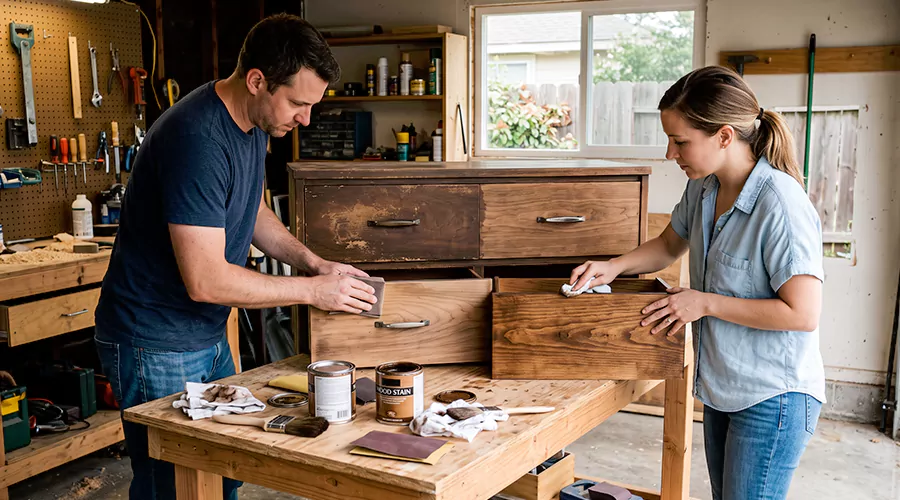
Wood restoration is the process of bringing worn or damaged wood back to a stable usable condition while keeping as much original material as possible. Smoke and water damage restoration may be needed when smoke residue or moisture has affected wood surfaces and cleaning alone cannot fully address the damage. It is usually needed when cleaning no longer solves the problem but the wood is still worth repairing instead of replacing.
Restoration can apply to furniture or architectural wood. It may involve repair without complete stripping.
What Does Restoring Wood Include?
The process can include several levels of work. Light wear may need cleaning and a new coating, while damaged pieces may need repairs before the finish is addressed.
Common restoration work includes:
- Careful cleaning
- Repair of loose joints
- Veneer stabilization
- Filling small losses
- Surface preparation
- Finish renewal
- Replacement of isolated damaged wood
The goal is to correct the problem without removing sound material unnecessarily.
How is Restoration Different From Refinishing?
Restoration is broader than refinishing. Refinishing focuses on the coating, while restoration can include structural repair and preservation of original details.
| Process | Main Purpose |
|---|---|
| Cleaning | Remove dirt or residue |
| Repair | Correct physical damage |
| Refinishing | Renew a failed coating |
| Restoration | Repair and preserve usable original wood |
| Replacement | Remove material that cannot be saved |
Wood refinishing may be one stage of a restoration project, but it does not describe every repair that the piece may need.
When is Restoration Needed?
Restoration is needed when wood has visible damage that ordinary cleaning cannot correct but remains structurally sound enough to keep. The strongest candidates have surface wear or isolated defects rather than widespread decay.
Signs that restoration may be appropriate include:
- Finish has worn through in several areas.
- Deep scratches reach the wood.
- Veneer is lifting at isolated edges.
- Small joints have loosened.
- Water stains remain after drying.
- Minor cracks have developed.
- Previous repairs are failing.
- Sections have lost their original finish.
A piece does not need restoration simply because it is old. Condition matters more than age.
What Types of Wood Damage Can Be Restored?
Many cosmetic defects can be restored when the material remains hard and stable. Damage becomes harder to correct after decay or major structural loss.
| Condition | Restoration Outlook |
|---|---|
| Worn finish | Good |
| Surface scratches | Good |
| Small loose joint | Good |
| Minor veneer lifting | Often good |
| Water staining | Depends on depth |
| Severe warping | Limited |
| Soft decayed wood | Poor |
| Major structural loss | Replacement may be needed |
Refinishing wood furniture can correct a failed coating after repairs are complete, but the finish should not be used to hide structural weakness.
How Does Water Damage Affect the Decision?
Water-damaged wood can often be restored when it dries without losing strength. Panels and joints can change shape during drying.
Do not sand recently wet wood immediately. Let the material stabilize first and check whether warping improves.
Restoration becomes less practical when:
- Wood stays soft after drying.
- Veneer has separated across large areas.
- Joints have opened badly.
- Mold returns after cleaning.
- The material has begun to decay.
Moisture problems should be corrected before any final coating is applied.
What Happens During a Restoration Project?
A restoration project should move from diagnosis to repair before cosmetic finishing. Starting with sanding can remove clues about the original finish.
A practical sequence is:
- Identify the wood and construction.
- Inspect joints and veneer.
- Check for active moisture.
- Clean the surface carefully.
- Repair structural defects.
- Stabilize loose decorative material.
- Prepare damaged finish areas.
- Apply a compatible protective finish.
Good restoration work removes only what has failed rather than automatically stripping every surface.
When is Refinishing Enough Without Full Restoration?
Refinishing can be enough when the wood is structurally sound and the main problem is a worn coating.
A simple distinction is:
- Choose cleaning for dirt on an intact finish.
- Choose refinishing for widespread coating failure.
- Choose restoration when repairs are also needed.
- Choose replacement when the wood has lost too much strength.
This approach avoids unnecessary removal of original material.
What Can You Check Yourself?
A basic condition check can help show whether the wood needs surface work or deeper repair. Use bright light and inspect the piece before applying oils or polish that can temporarily hide defects.
Check:
- Whether joints move under light pressure.
- Whether veneer edges are lifting.
- Whether scratches enter the wood.
- Whether the surface feels soft.
- Whether water stains remain damp.
- Whether previous repairs are separating.
- Whether the finish is peeling.
Do not force loose parts back into position. Brittle veneer or old joints can break when pushed.
When Should You Call a Professional?
Professional assessment is useful when the piece has historic value or could be damaged by ordinary refinishing methods.
Consider professional help when:
- The piece may be antique.
- Decorative veneer is extensive.
- Marquetry or inlay is loose.
- Structural joints have failed.
- Wood is badly warped.
- Previous repairs are difficult to reverse.
- The finish appears original and significant.
A professional can sometimes repair a limited section without stripping the entire piece.
How Can Restored Wood Be Protected?
Restored wood lasts longer when moisture and abrasion are controlled. Cleaning products should match the finish.
Useful habits include:
- Dust surfaces regularly.
- Wipe spills promptly.
- Use coasters under drinks.
- Keep furniture away from leaks.
- Use pads beneath decorative objects.
- Avoid placing hot items directly on finished wood.
- Maintain moderate indoor humidity.
Conclusion
Wood restoration repairs damaged material while preserving as much sound original wood as practical. It is most useful when cleaning is no longer enough but replacement would remove material that can still be saved. Surface wear and isolated repairs are often good candidates. Severe decay requires a different approach. If the piece has complex veneer or historic value, professional assessment can help preserve original details.
Frequently Asked Questions
Is restoration the same as refinishing?
No. Refinishing renews the surface coating, while restoration can also include repairs and preservation work.
Can badly scratched wood be restored?
Often, yes. The correct method depends on how deeply the scratches enter the wood.
Can water-damaged wood be restored?
Sometimes. The wood must dry and remain structurally stable before restoration continues.
Does restoration always require sanding?
No. Some projects need cleaning or local finish repair without full sanding.
Is old wood always worth restoring?
No. Severe decay or major structural loss can make replacement more practical.
Can veneer be restored?
Yes. Stable veneer can often be repaired, but thin or badly detached veneer needs careful handling.